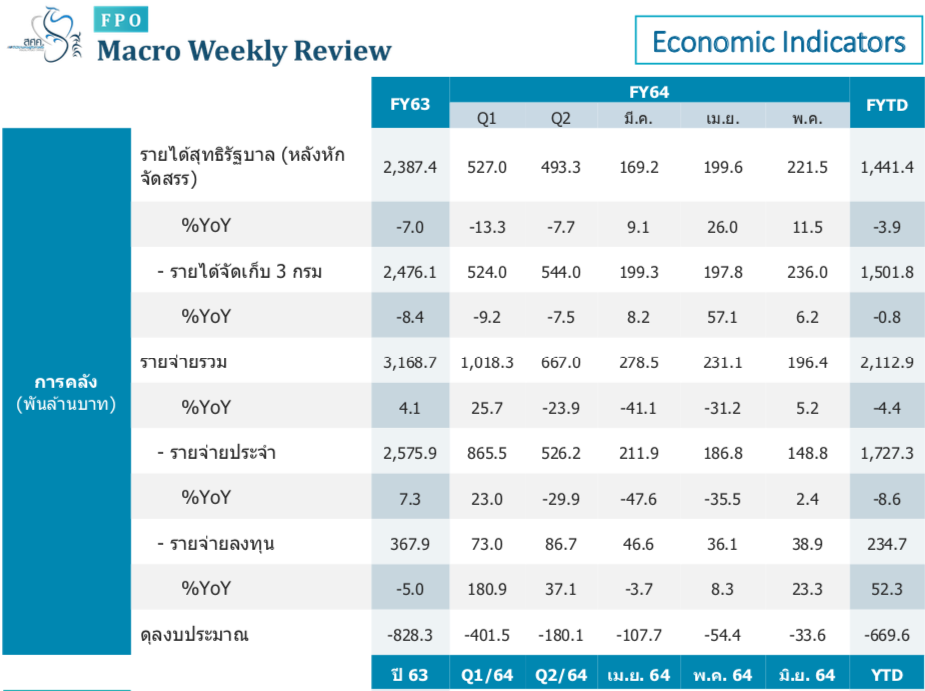
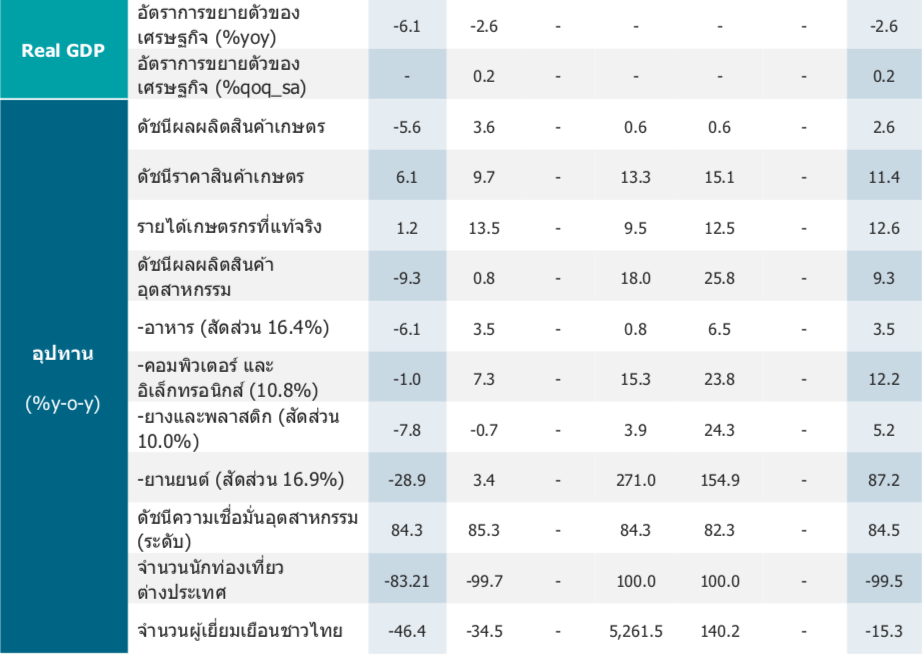
Fiscal Policy Office Weekly Economic Indicators Report as of July 9, 2021
Fiscal Policy Office Weekly Economic Indicators Report as of July 9, 2021 states the following:
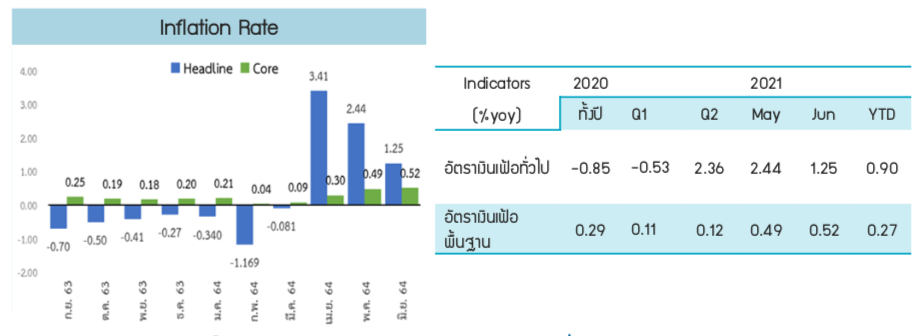
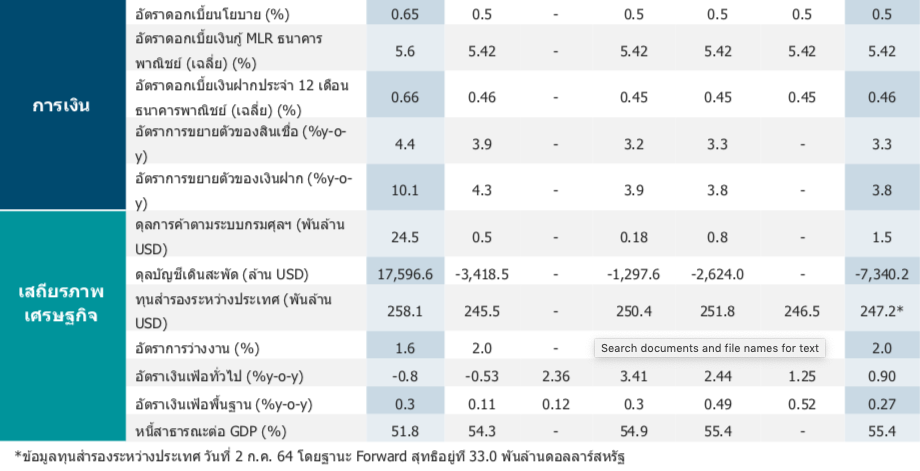
1. The general inflation rate for June 2021 grew by 1.25% year-on-year, while the core inflation rate grew by 0.52% year-on-year.
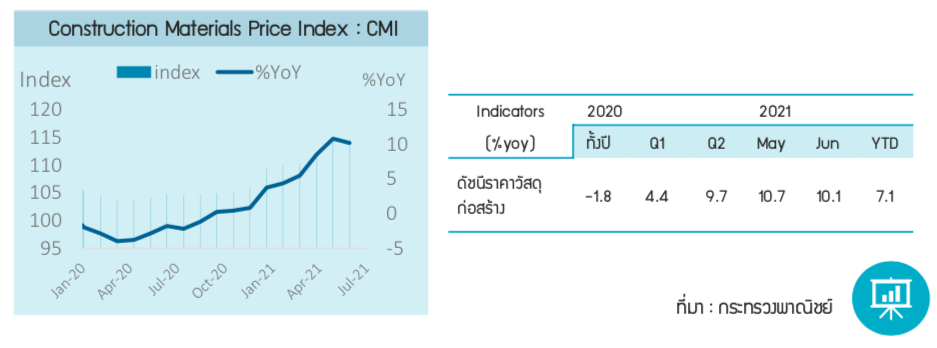
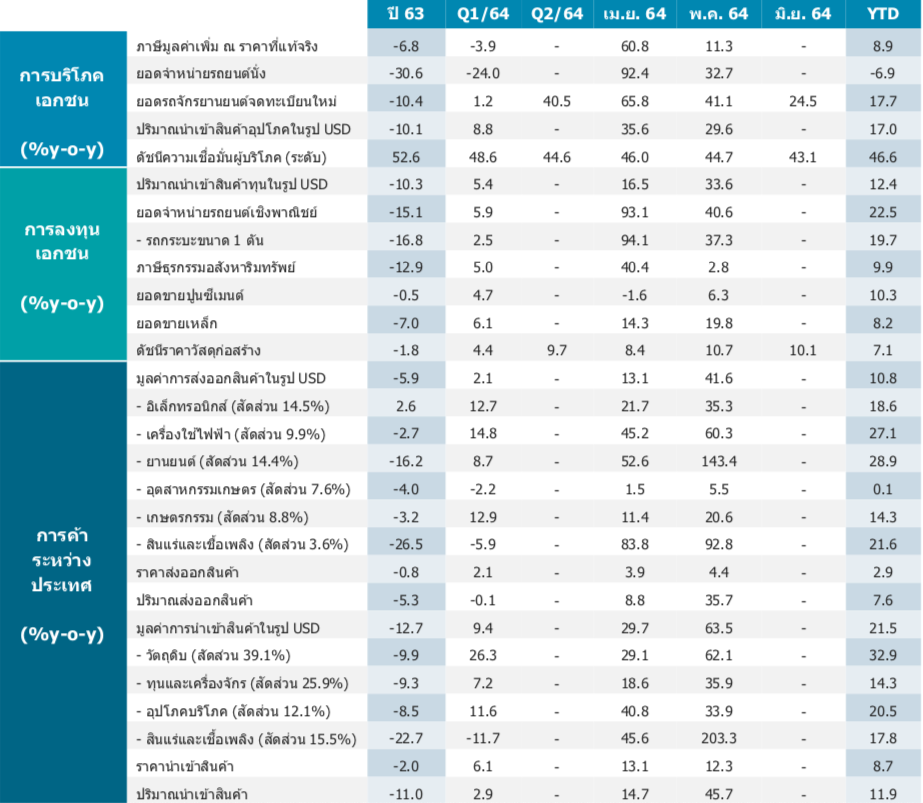
2. The construction materials price index in June 2021 increased by 10.1% compared to the same period last year.
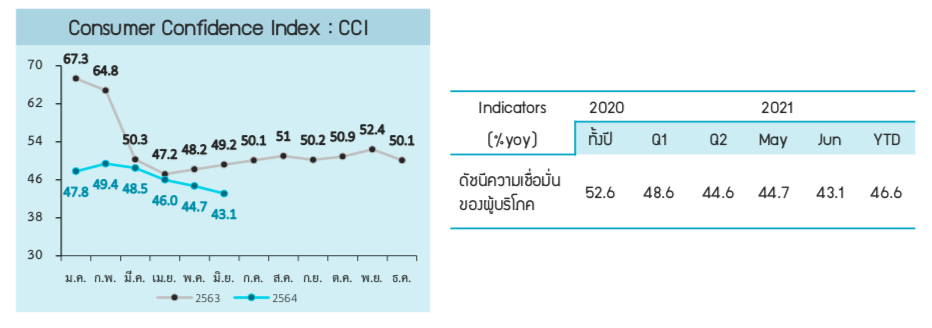
3. The consumer confidence index in June 2021 decreased to 43.1 from 44.7 in the previous month.
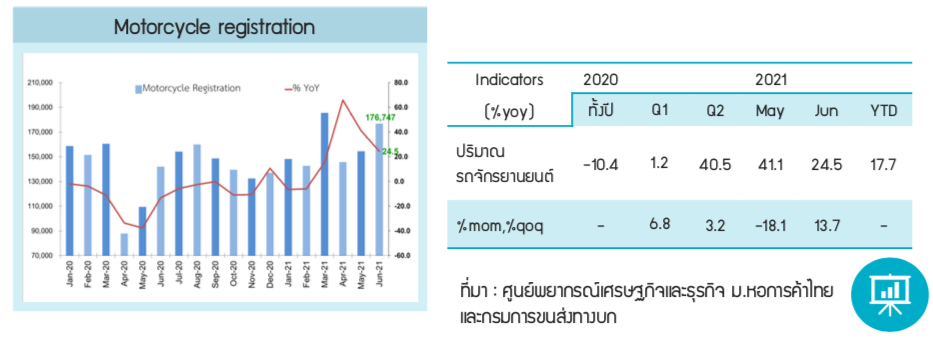
4. The number of newly registered motorcycles in June 2021 grew by 24.5% compared to the same period last year.
5. The current account balance for May 2021 recorded a deficit of -2,624.0 million USD.
6. Loans in financial institutions in May 2021 grew by 3.3% year-on-year, while deposits in financial institutions grew by 3.8% year-on-year.
Thai Economic Indicators
The general inflation rate for June 2021 increased to 1.25% year-on-year, close to the forecast of 1.2% by the Office of the National Economic and Social Development Council (NESDC). This marks the third consecutive month of inflation growth, although at a slowing rate. Excluding fresh food and energy, the core inflation rate grew by 0.52%.
The main factors contributing to the increase include rising prices in the energy sector and certain fresh food items, particularly pork, eggs, fresh fruits, and vegetable oil. Meanwhile, government measures to reduce living costs and the decline in prices of some fresh food items, such as fresh vegetables, jasmine rice, and sticky rice, have contributed to the slowdown in inflation this month.
The construction materials price index in June 2021 increased by 10.1% compared to the same period last year
This marks the ninth consecutive month of growth, driven by the steel and iron products sector, which grew by 43.7% due to high global steel prices. Additionally, the increase in copper and aluminum prices has led to a 4.5% rise in electrical and plumbing equipment prices, as these materials are key inputs. However, the cement sector continues to decline by -1.1% due to the slowdown in private construction resulting from the new COVID-19 outbreak.
Thai Economic Indicators
The consumer confidence index in June 2021 decreased to 43.1 from 44.7 in the previous month, marking the lowest level in 22 years and 9 months since the survey began in October 1998.
This decline is attributed to concerns over the COVID-19 outbreak in Thailand's third wave, alongside worries about the political situation becoming less stable and the slow vaccination rollout. Consumers feel that the Thai economy has not yet recovered significantly and lacks the necessary stimulus for recovery, despite government economic stimulus measures, particularly the 'Rao Chana' program and other initiatives that have somewhat boosted purchasing power.
The number of newly registered motorcycles in June 2021 grew by 24.5% compared to the same period last year, and when adjusted for seasonal effects, it increased by 13.7% compared to the previous month.
This marks the fourth consecutive month of growth, partly due to a low base effect from the previous year when consumers reduced spending on durable goods due to the impact of the COVID-19 outbreak. Other supporting factors include the good performance of agricultural product prices, which have continuously improved farmers' incomes, and government consumption stimulus measures that help sustain current consumer purchasing power.
Financial Sector Indicators
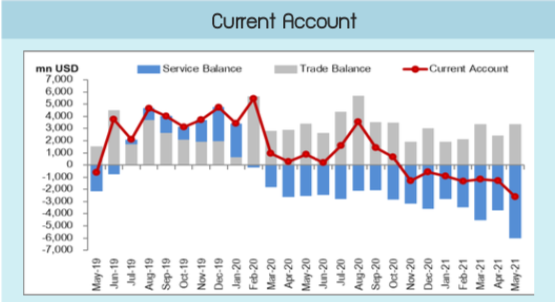
The current account balance for May 2021 recorded a deficit of -2,624.0 million USD, an increase in deficit from the previous month, which was -1,297.6 million USD.
The services, income, and transfers balance recorded a deficit of -6,001.9 million USD, an increase from the previous month, while the trade balance (BOP system) recorded a surplus of 3,377.8 million USD due to export values increasing more than import values, resulting in a total current account deficit of -7,340.2 million USD for the year 2021.
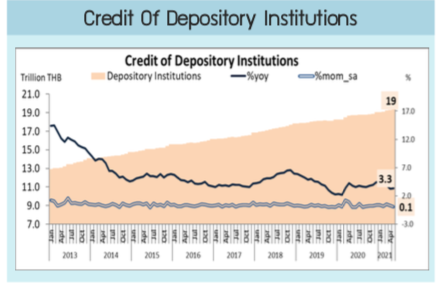
Loans in financial institutions in May 2021 had an outstanding balance of 19.3 trillion THB, representing a growth of 3.3% year-on-year.
This is a slight acceleration of 0.1% from the previous month (seasonally adjusted). When categorized by loan type, business loans grew slightly by 0.1%, while consumer loans remained stable at a growth rate of 5.2% year-on-year.
Source: Bank of Thailand
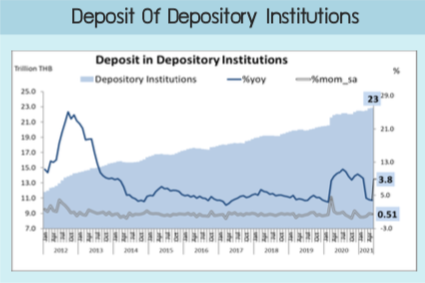
Deposits in financial institutions in May 2021 had an outstanding balance of 22.9 trillion THB, representing a growth rate of 3.8% year-on-year.
When seasonally adjusted, this represents a growth of 0.5% from the previous month. Deposits from commercial banks grew by 4.3%, while deposits from specialized financial institutions grew at a slower rate of 2.7% year-on-year.
Source: Bank of Thailand
International Economic Indicators
United States: The PMI index for the non-manufacturing sector (ISM) in June 2021 stood at 60.1 points, down from 64.0 points in May 2021, due to declines in business activity, new orders, new export orders, and employment. The U.S. continues to face challenges such as material shortages, rising product prices, delayed maritime shipping, and labor shortages. The number of first-time unemployment claims for the week of June 27 to July 3, 2021, was 373,000, an increase from the previous month’s 371,000, exceeding market expectations and remaining above the pre-COVID-19 average of 230,000 weekly claims.
China: The PMI index for the services sector (Caixin) in June 2021 stood at 50.3 points, down from 55.1 points in the previous month, marking the lowest level since May 2020 amid the Delta variant COVID-19 outbreak in Guangdong province, a key shipping hub. The inflation rate in June 2021 was 1.1% year-on-year, down from 1.3% in the previous month due to declining food prices.
Japan: The PMI index for the services sector in June 2021 rose to 48.0 points from 46.5 points in May 2021. However, the index remains below 50.0 points due to ongoing restrictions to prevent the spread of COVID-19.
Eurozone: The PMI index for the services sector in June 2021 stood at 58.3 points, up from 55.2 points in May 2021, supported by the easing of COVID-19 control measures. Retail sales in May 2021 grew by 9.0% year-on-year, a decrease from April's growth of 23.3%, but still exceeding market expectations of 8.2% growth.
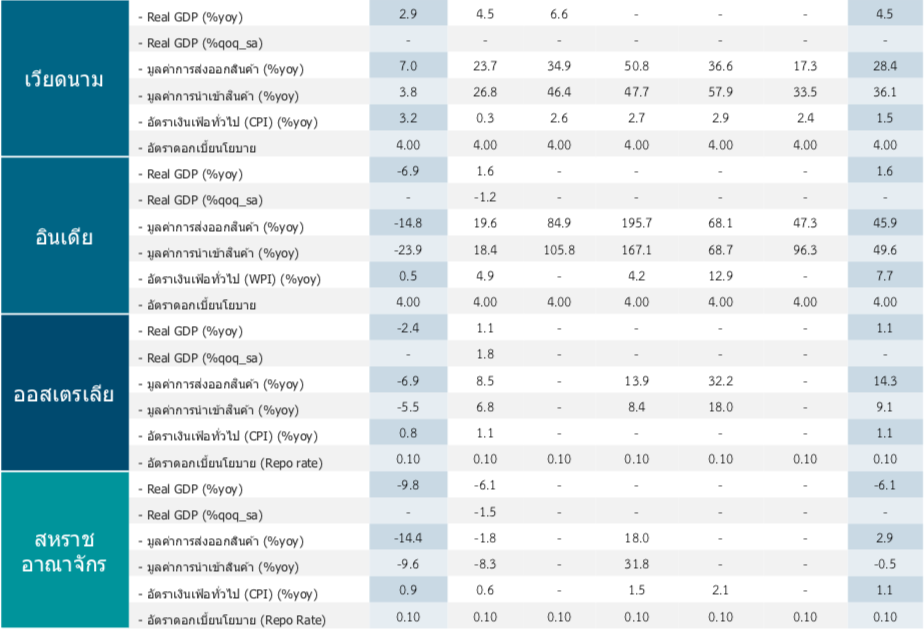
Australia: The PMI index for the services sector in June 2021 decreased to 56.8 points from 60.4 points in May 2021, due to the new COVID-19 outbreak leading to lockdowns in four major cities: Brisbane, Sydney, Perth, and Darwin.
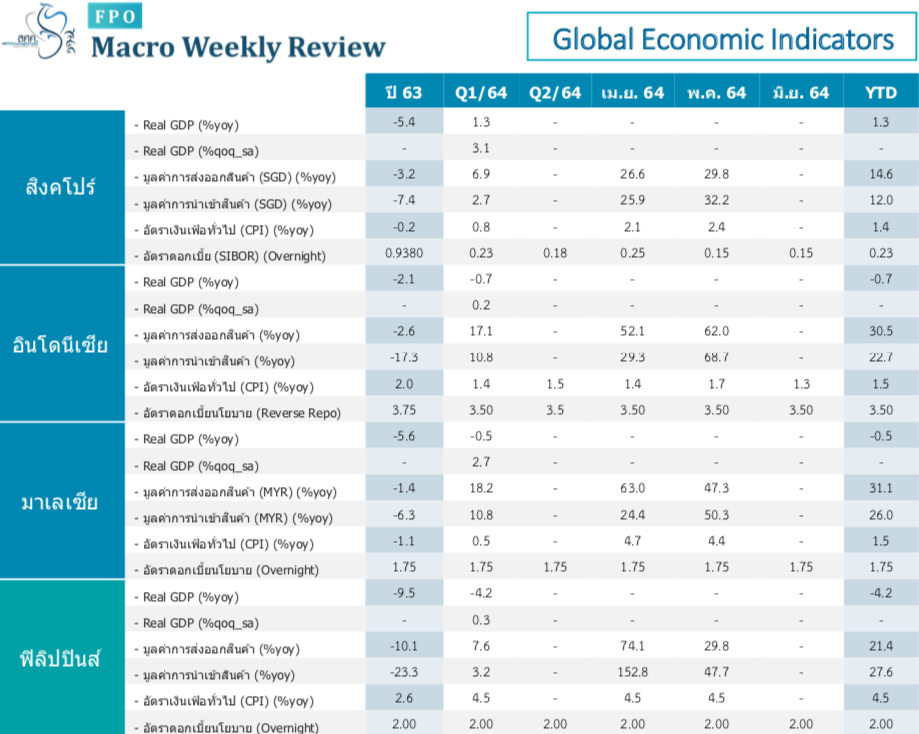
Malaysia: The unemployment rate in May 2021 was 4.5% of the total labor force, down from 4.6% in April 2021. The Central Bank of Malaysia announced that it would maintain the interest rate at 1.75% per annum.
India: The PMI index for the services sector in June 2021 stood at 41.2 points, down from 46.4 points in the previous month, marking the lowest level since August 2020 due to renewed concerns over the COVID-19 outbreak after several states in India eased lockdown measures in mid-June 2021.
Singapore: The PMI index for the manufacturing sector in June 2021 stood at 50.1 points, down from 54.4 points in the previous month, due to ongoing COVID-19 control measures. Retail sales in May 2021 grew by 79.7% year-on-year, up from 54% in the previous month, driven by low base effects from last year and economic recovery, with automotive sales being a significant contributing factor.
Philippines: The inflation rate in June 2021 was 4.1% year-on-year, down from 4.5% in the previous month, primarily due to transportation cost increases. Industrial production in May 2021 grew by 249.5% year-on-year, up from 154.3% in the previous month, largely due to petroleum products.
The value of exports in May 2021 grew by 29.8% year-on-year, down from 74.1% in the previous month. The value of imports in May 2021 grew by 47.7% year-on-year, down from 152.8% in the previous month, resulting in a trade deficit of 2.75 billion USD in May 2021.
Taiwan: The unemployment rate in May 2021 was 4.15% of the total labor force, up from 3.71% in the previous month, marking the highest level since May 2020 due to the new COVID-19 outbreak, prompting the government to intensify control measures after record daily new cases were reported.
The inflation rate in June 2021 was 1.89% year-on-year, down from 2.48% in the previous month, due to declines in fuel prices, transportation costs, and utility fees, as the government suspended special electricity rates during the summer as part of COVID-19 relief measures. The value of exports in June 2021 slowed down from 35.1% growth in the previous month, while the value of imports in June 2021 accelerated from 42.3% growth in the previous month, resulting in a reduced trade surplus of 5.15 billion USD in June 2021.
United Kingdom: The PMI index for the services sector in June 2021 slightly decreased to 62.4 points from 62.9 points in May 2021. However, the index remains above 50.0 points, indicating continued expansion in the services sector, supported by the easing of lockdown measures.
Money Market and Exchange Rate Indicators
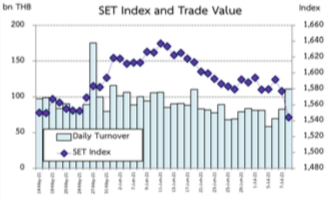
The SET index slightly decreased from the previous week, in line with other regional stock markets such as Nikkei225 (Japan), HSI (Hong Kong), and KLCI (Malaysia). The SET index increased at the beginning of the week but continued to decline until the end of the week. On July 8, 2021, the index closed at 1,543.67 points, with an average trading value between July 5-8, 2021, of 80,287.43 million THB per day. Foreign investors, domestic institutional investors, and proprietary investors were net sellers, while retail investors were net buyers. During July 5-8, 2021, foreign investors sold net securities worth -1,522.01 million THB.
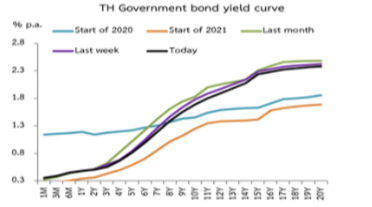
The overall yield on government bonds decreased by -1 to -9 bps during this week, with no government bond auctions held. Between July 5-8, 2021, foreign investor capital inflows into the bond market were net 985.97 million THB, and since the beginning of the year until July 8, 2021, foreign investor capital inflows into the bond market totaled 71,873.69 million THB.
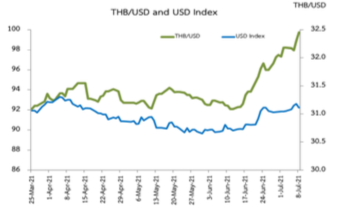
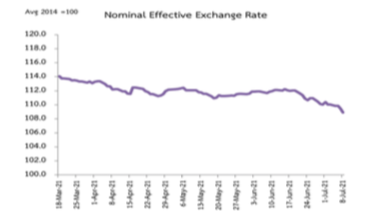
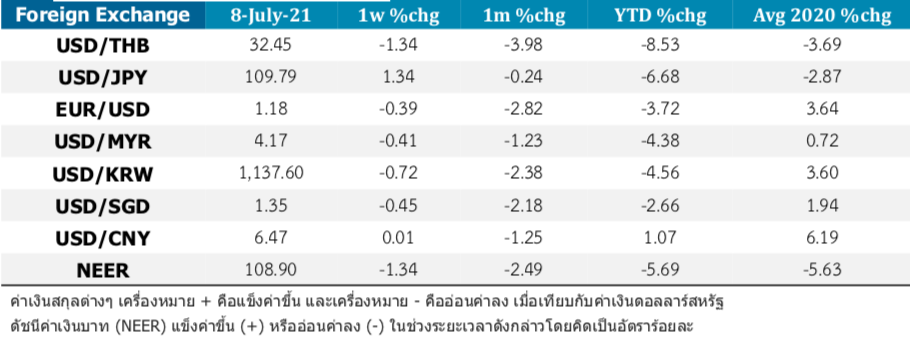
The Thai baht weakened against the previous week, closing at 32.45 THB per USD on July 8, 2021, a depreciation of -1.34% from the previous week, in line with other currencies such as the euro and Singapore dollar, which also weakened against the USD. Meanwhile, the Thai baht depreciated more than other major currencies in the region, resulting in a -1.34% decrease in the nominal effective exchange rate (NEER) from the previous week.
Source: Macroeconomic Policy Bureau, Fiscal Policy Office, Ministry of Finance, 02-273-9020 Ext. 3259